
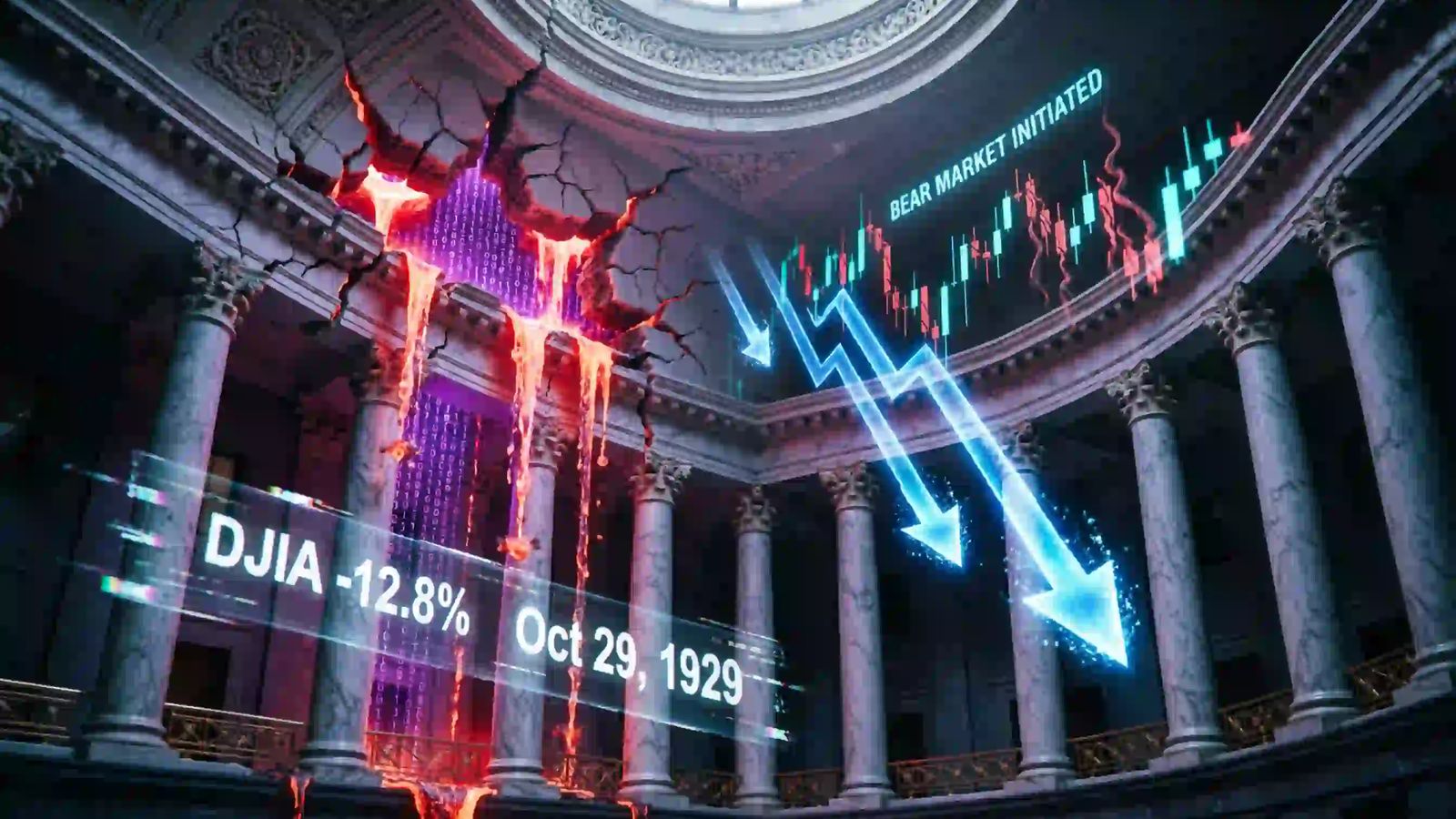
[MARKET CYCLES / CRASH PSYCHOLOGY] | [STRATEGIC ASSET #10]
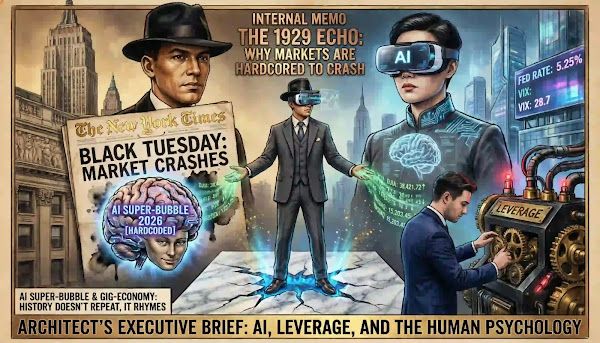
The 1929 Echo: Why Markets Are Hardcoded to Crash
"History doesn't repeat itself, but it often rhymes. Analyzing the structural similarities between the Roaring Twenties and the 2025 AI Super-Bubble."
| 1929 PEAK P/E | 2025 EST. P/E | DRIVING FACTOR |
|---|---|---|
| 32.6x | 35.8x (Tech Heavy) | Irrational Exuberance |
This report serves as a bridge, connecting the dots between Asset #01 (South Sea Bubble) and our current geopolitical reality. We analyze why leverage is the common denominator of every ruin, and why the most dangerous phrase in finance remains: "This time, it's different."
|
I. The Anatomy of the Bubble
In 1929, the bubble was built on radio, aviation, and automobiles. In 2025, it is Generative AI, Semiconductors, and DeFi. The technologies change, but the Math of Greed is constant. Investors in 1929 were using "Margin Loans"—borrowing 90% of the stock price from their brokers.
When the Federal Reserve raised interest rates to cool the market (sound familiar?), the marginal buyers disappeared. This triggered "Margin Calls." When the brokers called for their money, investors were forced to sell everything at once. This is the definition of a Liquidity Spiral.
| INDICATOR | 1929 | 2025 |
|---|---|---|
| Leverage | 10:1 (Margin) | Derivatives & Options |
| Catalyst | Rate Hikes | Debt Monetization |
| Narrative | "Permanent Plateau" | "AI Singularity" |
II. The Buffett Indicator & Concentration
One of the most terrifying parallels is Market Concentration. In 1929, a handful of holding companies (like RCA and General Electric) controlled the majority of market gains. In 2025, the "Magnificent Seven" and AI-semiconductor giants represent an unprecedented percentage of the S&P 500.
When the top is heavy, the fall is fast. The Buffett Indicator (Total Market Cap to GDP) is currently at levels that make 1929 look like a dip. We have entered the era of "Valuation Blindness," where investors buy not based on cash flow, but on the fear of missing out (FOMO).
"Bull markets are born on pessimism, grow on skepticism, mature on optimism and die on euphoria." — Sir John Templeton
III. Strategic Verdict: The Survival Protocol
The 1929 crash didn't just happen in a day. It was a slow-motion wreck that lasted years. The lesson for the Chronoverse investor is to remain Liquid. Asset #10 is the reminder that in the final stage of a bubble, "Return OF Capital" is more important than "Return ON Capital."
NEXUS STRATEGIC PATH
- ★ ACCESS ASSET #78: AI Energy Crisis (The 2025 Bubble Core)
- ◄ PREVIOUS: Asset #39: The Red Web
- ↺ DATA LOSS: Asset #61: Library of Alexandria
Strategic Intelligence Archive
To navigate the broader tectonic shifts in macroeconomic history and systemic risk protocols, explore our comprehensive Macro-Historical Intelligence Index to decrypt competing financial anomalies.